

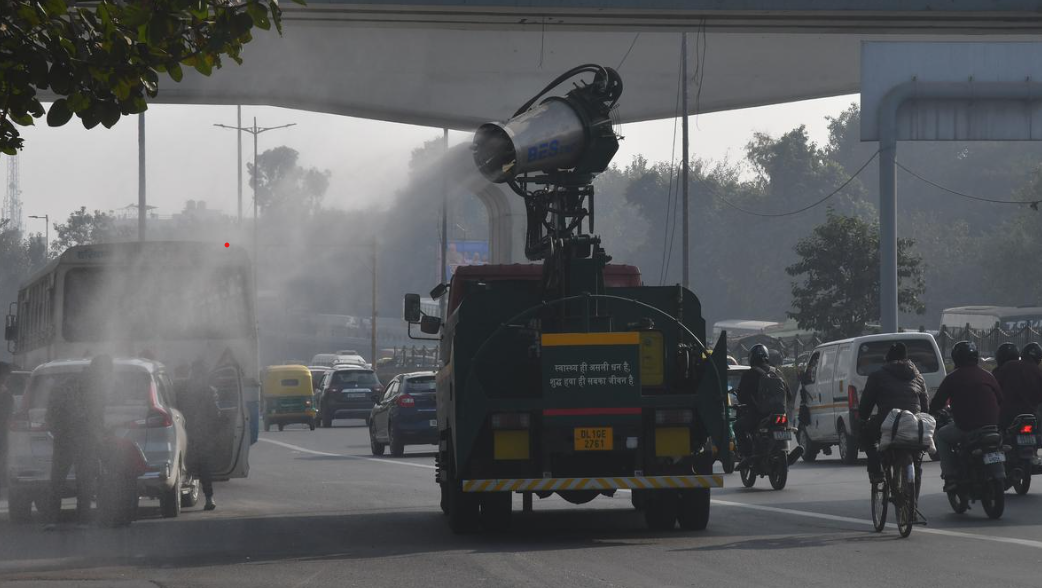
On the National Clean Air Programme
- When the Indian government launched the National Clean Air Programme (NCAP) in 2019, it was to cut the concentration of atmospheric Particulate Matter (PM) by 20-30% by 2024, from 2017 levels.
- This was later revised to 40% by 2026.
Key highlights
- NCAP's plan to fight air pollution Launched in 2019, NCAP targets cleaner air through city-specific plans.
- Cities with consistently high pollution levels must create and implement these plans.
NCAP's goals:
- Reduce air pollution through stricter controls
- Improve air quality monitoring across India
- Raise public awareness about air pollution
NCAP's funding and progress:
- Over 10,000 crore rupees have been allocated for the program.
- There have been delays in setting up air quality information centers and forecasting systems.
- Only a portion of the allocated funds have been used so far.
- While there's been good progress on continuous air monitoring stations, expanding the regular monitoring network is lagging behind.
Challenges NCAP faces:
- States haven't implemented the plans consistently.
- Delays due to unclear procedures and lack of timelines.
- Other hurdles include bureaucracy and doubts about the effectiveness of some measures.
The way forward for NCAP:
- Studies to pinpoint pollution sources are crucial.
- Air quality modeling can help understand the impact of pollution from faraway sources.
- Faster implementation on the ground is essential.
- Overall, achieving cleaner air will be challenging but necessary.
- NCAP's success depends on strong science, smart use of funds, and effective execution.