

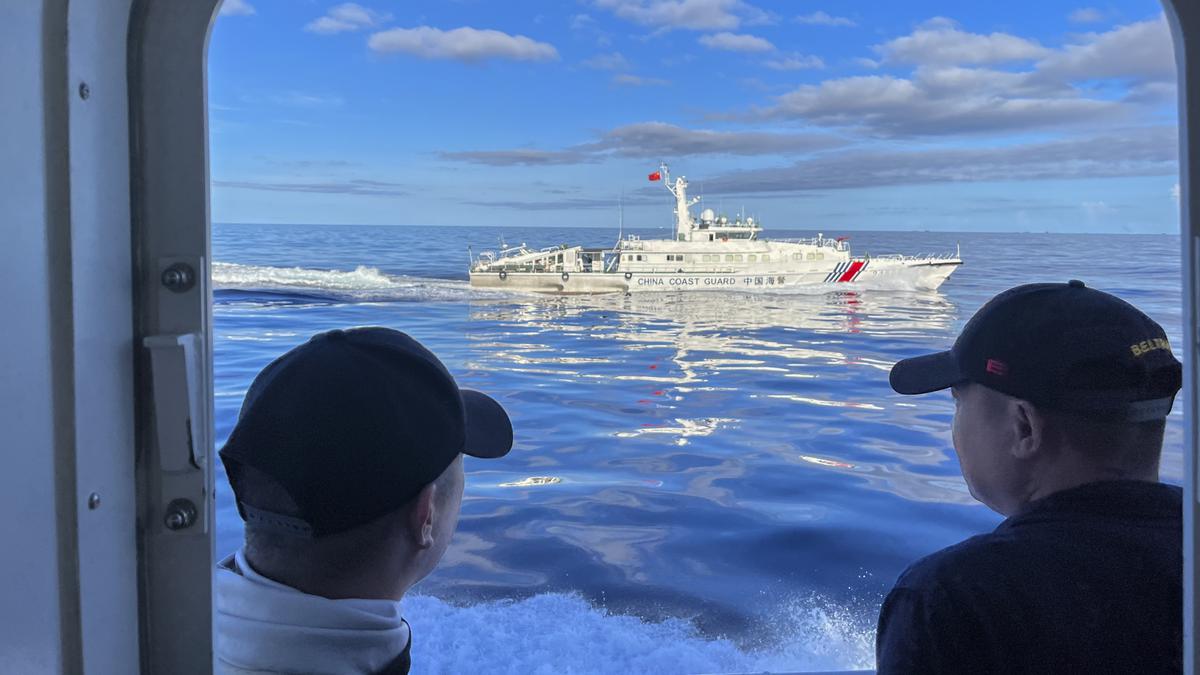
India’s nuanced approach in the South China Sea
- Recently, India’s External Affairs Minister, articulated, in a joint statement during his visit to Manila, India’s full support for the Philippines in upholding its national sovereignty.
Key highlights
- A joint statement in 2023 between New Delhi and Manila had also called for China to adhere to the rules-based maritime order and acknowledge the International Court of Justice ruling of 2016 in favour of Manila.
- New Delhi’s position on the South China Sea has changed significantly in recent years,
A policy evolution
- New Delhi’s engagement with the region was initially primarily economic, driven by its Look East Policy
- Which aimed to enhance economic integration with Southeast Asia and the imperative to secure energy resources to fuel its growing economy.
- The transformation of India’s policy orientation from Look East to Act East under the Prime Minister administration has marked a shift towards a more strategic and active engagement with the Indo-Pacific region.
- This policy evolution reflects India’s acknowledgment of the changing geopolitical landscape
- India has also simultaneously strengthened its own capacities through forward positioning, mission-based deployments, reinforced maritime domain awareness, and deep-water maritime facilities.
India’s complex ties with China
- The two countries have a long history of border disputes which have intensified since the Galwan Valley incident of 2020.
- With Beijing’s periodic incursions into India’s territory and, most recently, even renaming Indian villages in Arunachal Pradesh.
- India sent a frontline warship to the South China Sea in a demonstration of India’s capability for asymmetric deterrence.
- India’s strategic engagements, including regular naval exercises and the strengthening of military cooperation with Southeast Asian nations, serve dual purposes:
- They underscore India’s commitment to regional security
- Act as a counter to China’s unlawful assertions.
The ASEAN factor
- The disputes in the South China Sea, primarily involving China and several Association of Southeast Asian Nations (ASEAN) countries,
- As a responsible stakeholder in the Indo-Pacific, India can no longer shy away from taking unambiguous positions on matters of such critical importance.
- The ASEAN centrality in India’s Indo-Pacific strategy also makes it imperative for India to buttress the ASEAN position.
Conclusion
- India’s nuanced approach in the South China Sea, therefore, is emblematic of its broader strategy aiming to safeguard its interests while contributing to a collective effort to maintain peace, stability, and respect for international law in the Indo-Pacific region.