

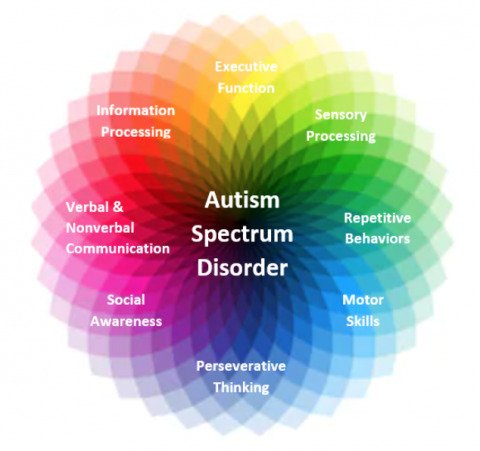
How to assess and identify the severity of the Autism spectrum disorder
- Autism spectrum disorder (ASD) is a complex developmental condition that impacts the patient’s social communication, interactions, and behaviour.
ASD
- Autism spectrum disorder (ASD) is a neurodevelopmental disability caused by differences in the brain.
- ASD is referred to as a “developmental disorder” because symptoms usually appear in the first 2 years of the child.
- Autism is also termed a “spectrum” disorder because there is wide variation in the type and severity of symptoms people experience.
- Currently, there is no cure or therapy available to treat or reverse ASD.
The levels of ASD
- The severity of ASD is determined by assigning a level of support such as 1, 2 or 3 based on the individual’s need for assistance and the impact of their symptoms on their daily lives.
- Level 1: Patients with autism may have social challenges that need some help as they face trouble starting conversations, responding to others, making friends, etc.
- Level 2: At level 2, the individuals require more support as they face communication challenges owing to difficulties to comprehend coherent conversations or understand nonverbal cues.
- Level 3: Individuals require the highest level of support as they avoid interacting with others, have aggravated communication challenges and also have repetitive behaviours which affect their ability to function.
Screening tools
- Doctors have adopted various methods of screening for autism such as informal observations, formal assessments and structured tests.
- Modified Checklist for Autism in Toddlers (M-CHAT) is one of the most common screening tools used to test children aged 16-30 months. M-CHAT is a 20-question test.
- The Ages and Stages Questionnaire (ASQ) is another general developmental screen that assesses developmental challenges at specific ages.
- The Screening Tool for Autism in Toddlers & Young Children (STAT) has 12 activities to assess play, communication, and imitation among toddlers and young children.
- Further, the Childhood Autism Rating Scale uses ratings such as “normal” and “severe” to indicate a level of autism.