

Ableist language further marginalises people with disabilities
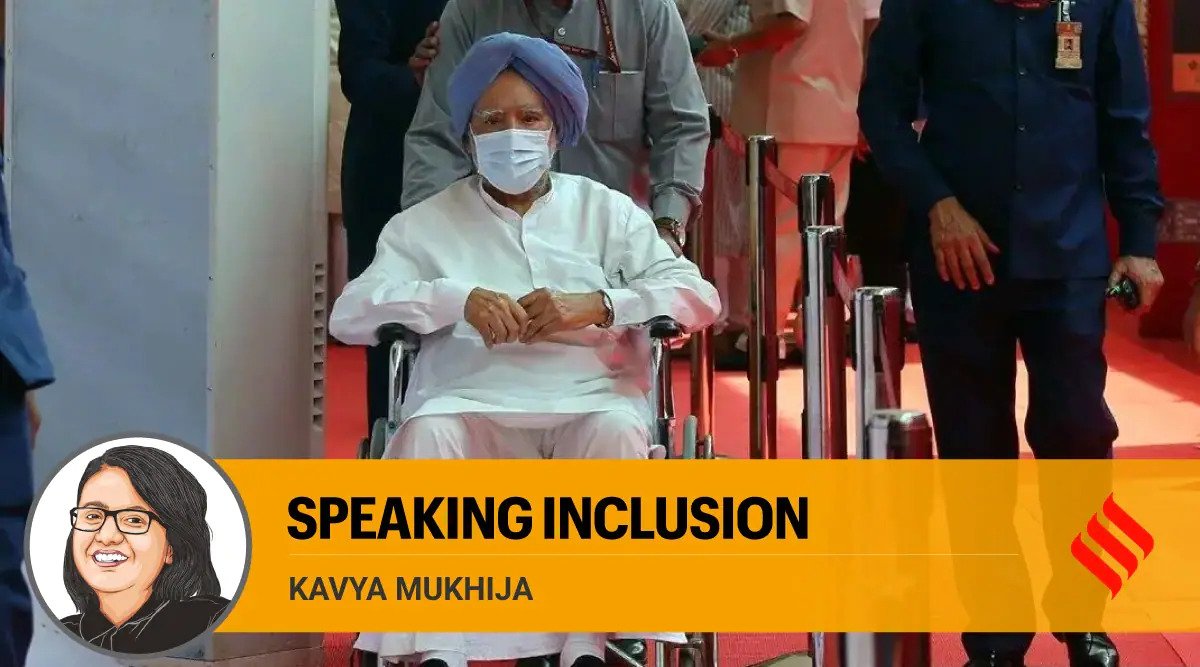
- A recent article (‘Ex-PM Manmohan Singh shifted to last row in Rajya Sabha for easy movement in wheelchair’, February 2) used the term “wheelchair-bound”. This is an example of ableism in language.
- Instead, a person who uses a wheelchair is not “wheelchair-bound”, but just a “wheelchair-user”.
Characteristics of ableism
- Exclusive language: The differential treatment people with disabilities experience because of their disabilities. It is rooted in the assumption that people with disabilities have to be fixed to fit into society.
- Sees disability negatively against “ideal” non-disabled society: This language of exclusion directly affects people with disabilities.
Role of language
- Can be used to influence thoughts, actions and behaviours, and pave the way for a better world.
- Inclusive language needs to be used: Through it, we “see” the person over everything else — including their disabilities. It makes them feel like they’re not just their disability.
Role of media
- Can influence public opinion and establish societal norms.
- An appropriate representation of disability in the media can help raise awareness and counter stigma and misinformation.
- Can shape perceptions, thereby enabling the integration of persons with disabilities into the mainstream in the right way.
Way Forward
- To converse with people with disabilities to understand the nuances of the experiences within the community